Project achievements
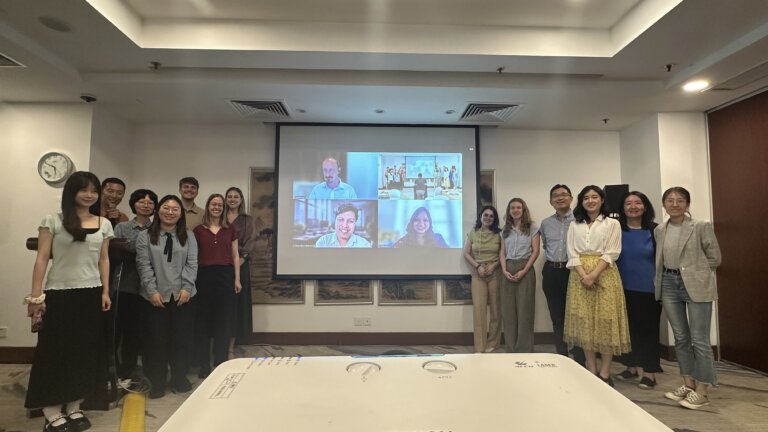
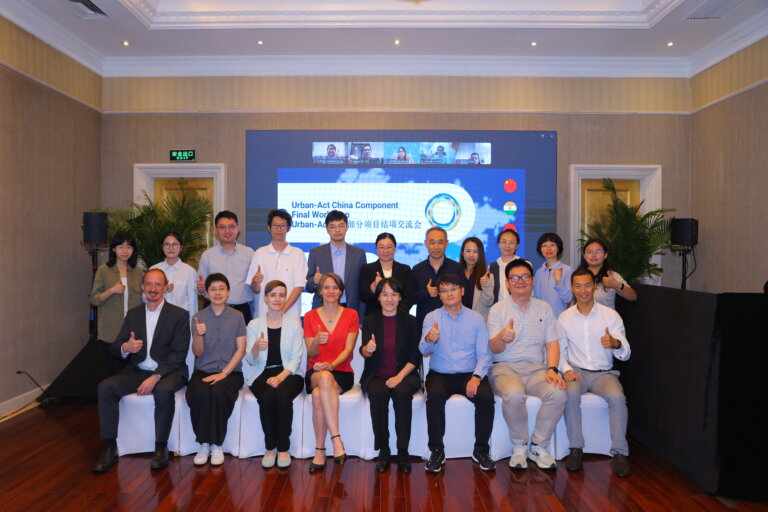
The event brought together key stakeholders of the four-year regional project to review and formally conclude its China component. In their opening remarks, representatives from both Chinese ministries expressed appreciation for the International Climate Initiative (IKI)-funded Urban-Act project and the technical cooperation facilitated by the Deutsche Gesellschaft für Internationale Zusammenarbeit (GIZ).
During the event, the Urban-Act China team and three key Chinese implementing partners –the National Centre for Climate Change Strategy and International Cooperation (NCSC), the Shanghai Urban Planning & Design Research Institute (SUPDRI) and the College of Transportation at Tongji University – presented the project’s outcomes over the past years. They reviewed core activities, focusing on technical research on low-carbon and climate-adaptive urban spatial planning, as well as knowledge exchange programmes between Chinese cities and urban counterparts across four Asian economies: India, Indonesia, Thailand and the Philippines.
Notably, the project’s research outputs have supported national-level policy development by drafting three regulatory and guidance documents, and contributed to sub-national level policy development in the pilot cities. Thereby it supported the development of climate-resilient urban spatial planning frameworks in China.
Insights from project and regional partners
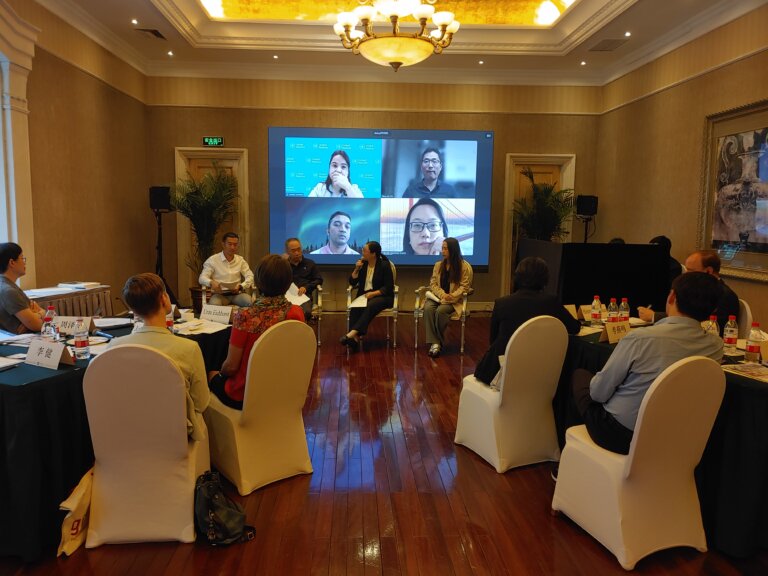
The presentations were followed by a panel discussion with experts from domestic and international institutions, including the China Land Surveying and Planning Institute, Shanghai Tongji Urban Planning and Design Institute Co., Ltd., Shenzhen Bus Group, the National Climate Centre of the National Meteorological Administration, the College of Architecture and Urban Planning at Tongji University, as well as regional representatives from ESCAP and UCLG ASPAC. Drawing on four years of hands-on project involvement and professional research practice, panellists shared insights and reflections on their respective contributions to Urban-Act project activities.
Panellists highlighted the practical value and regional impact of the Urban-Act project, acknowledging that the initiative has established a cross-regional platform for knowledge sharing and institutional cooperation. Focused on low-carbon transition and resilient urban development within the spatial planning sector, the platform has enabled ongoing experience exchange and collaborative progress between China, India, Indonesia, Thailand and the Philippines.
All stakeholders agreed that urban climate governance represents a long-term, systematic challenge that cannot be addressed by individual national action alone. Effective responses to urban climate risks require sustained cross-border and cross-institutional collaboration, with IKI-funded regional initiatives such as Urban-Act remaining a vital component of advancing low-carbon, climate-resilient development across the region.
For more information about project delivery details and achievements, the official project summary brochure “Urban-Act China Component: A Closing Look Back” is available for download here.