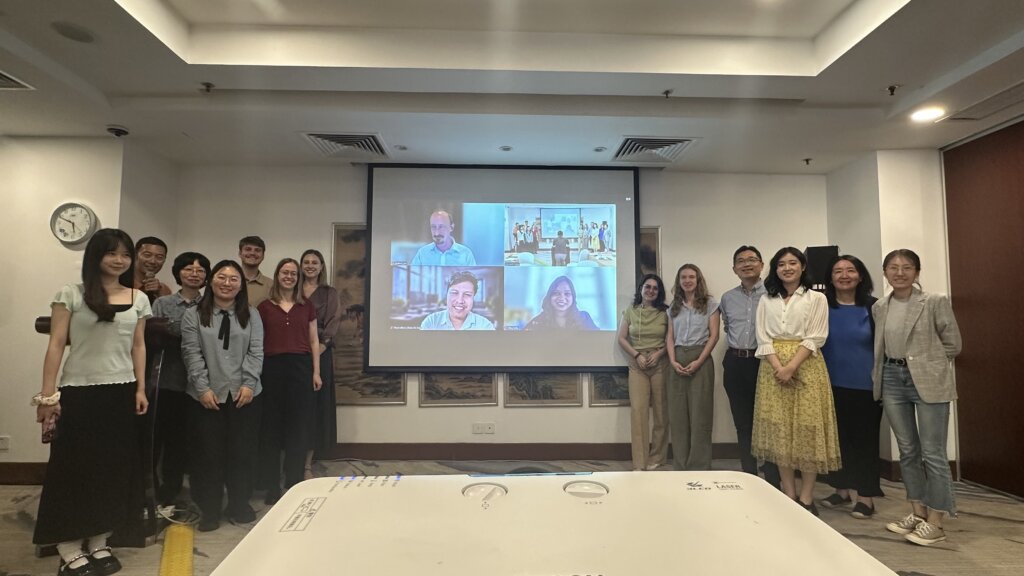
Consequences of climate change disproportionately affect vulnerable groups. Increasingly frequent extreme weather events, for instance, exacerbate their daily challenges as well as existing social and economic inequalities. On 26 June 2026, the China component of the IKI-funded Urban Act project hosted a hybrid workshop titled “Cities for All – Inclusive, Green & Resilient,” bringing together international stakeholders to advance inclusive urban climate action.
A platform for cross-regional knowledge sharing
The workshop brought together Urban Act partner countries – China, India, Indonesia, and the Philippines – to share successful, gender-inclusive solutions for urban development. Building on this regional exchange, GIZ teams from China and Mongolia expanded the conversation by outlining current and future strategies to integrate gender equality into energy, climate, and transport projects across East Asia.
The event hosted approximately 20 in-person experts and stakeholders from Shanghai’s Tongji University, the National Centre for Climate Change Strategy and International Cooperation (NCSC) and GIZ East Asia. In addition, 20 participants joined virtually including representatives from the National Development Agency (Bappenas, Indonesia), Hongyan Social Work Service Centre (China), Clean Air Asia (Philippines), TU Dortmund University (Germany) and GIZ offices across Asia.

Spotlight on local innovations: Shanghai’s ‘15-Minute City’
Delivering China’s local best practice insights, Dr. Wang Xin from Tongji University showcased Shanghai’s “15-Minute City” inclusive development model. This framework targets climate adaptation and resilience building for two key vulnerable groups: older adults and children.
Community canteens for the elder: With residents aged 60 and above accounting for 37.6% of Shanghai’s population, community canteens have become a central element of climate-resilient urban services. During extreme summer heatwaves, many older citizens rely on these facilities for daily meals. The dedicated food delivery services offered by these canteens during bad weather conditions, including heavy rain, strong winds, and snowfall, help ensure uninterrupted access to essential services and protect the well-being of older people throughout the year.
Football fields for youth: As a densely populated metropolis, Shanghai faces severe land scarcity, particularly in downtown districts. To expand access to recreational spaces by using existing urban space more efficiently, the city has developed innovative community football facilities on university campuses, in urban parks, and on building rooftops. Integrated into the 15-Minute City concept, these accessible, neighbourhood-based facilities encourage active, local mobility and reduce transport-related emissions while fostering social inclusion, health benefits, and community interaction.
Empowering grassroots and frontline workers
Both international speakers and local organisations shared practical approaches for the systematic integration of vulnerable groups and their needs into urban renewal and climate resilience efforts.
Green domestic services: The Hongyan Social Work Service Centre based in Beijing shared its pioneering work in developing green service systems for domestic workers. Through specialised vocational training and targeted guidance materials, the initiative equips domestic workers with the knowledge and skills to deliver environmentally sustainable and inclusive care services. Thereby, it aims to improve the quality of care for children, older adults, and persons with disabilities while promoting low-carbon lifestyles at the household level.
Protecting municipal frontline workers: An example from Shimla, India, showcased how the municipal corporation has established changing facilities across all urban wards to support frontline workers exposed to increasingly frequent extreme weather events. Designed to enhance occupational safety and well-being during periods of intense rainfall, heatwaves, cold waves, and landslides, the facilities provide running water, heating, rest areas, secure storage, and first aid equipment – guaranteeing safe and fair working conditions across all seasons.

Advancing inclusive urban development with data-driven policy
Complementing the exchange of practical experiences, the workshop presented findings from recent research on the climate vulnerabilities of three population groups in Beijing: domestic workers, delivery personnel, and people with disabilities. The research provides evidence to inform more inclusive urban planning and policymaking, helping policymakers, urban planners, and other stakeholders better understand and address the specific needs of vulnerable groups. (The full survey results are available here: Link )
The transition from gender-responsive urban practices to gender-transformative urban development is a long-term, gradual process that requires sustained commitment and collaboration. Nevertheless, every step towards more inclusive planning and decision-making strengthens urban resilience. Ensuring that no one is left behind is therefore not only a social imperative but also a prerequisite for urban development and effective climate action. Moving forward, the Urban Act project will continue to promote gender equality and social inclusion through cross-country knowledge exchange, evidence-based policy dialogue, and systematic integration of gender perspectives into green and resilient urban development across all partner countries.