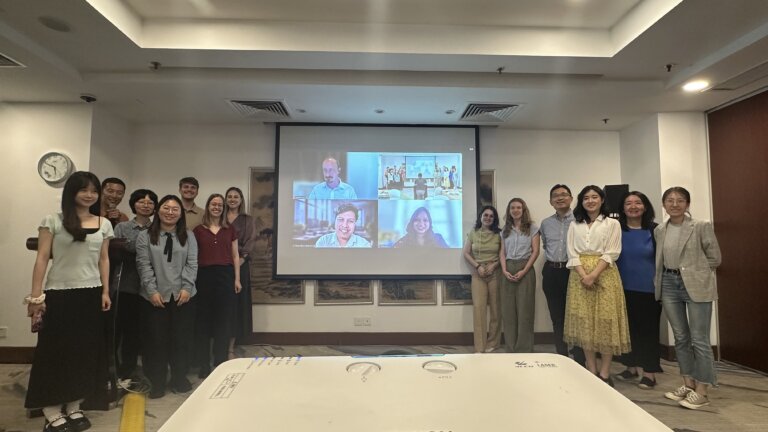
From July 21 to 25, 2024, a group of six Chinese e-bus and e-taxi operation experts from Shenzhen Bus Group visited the Indonesian cities of Padang and Medan, pilot cities of the Urban-Act project in Indonesia. Organised by GIZ China and GIZ Indonesia, this visit facilitated expert exchange and thus optimise local public transportation systems and promote climate-friendly transportation solutions. Through site visits and discussions with local authorities and agencies, the experts discussed bus electrification and supportive infrastructure.

In this collaborative effort Chinese experts could share their best practices in urban public transportation, reinforcing the China Component as a knowledge-sharing partner in the project. This knowledge exchange began in September 2023 when representatives from Padang and Medan, visited the Chinese cities of Xiamen, Shenzhen, and Guangzhou. Following this successful initial exchange and aligned with the development goals of Padang and Medan to enhance public transportation systems, the two cities asked the GIZ Urban-Act project to facilitate a return visit from Shenzhen Bus Group.
During the trip in Indonesia, the Chinese experts engaged with provincial and municipal governments and authorities, including the West Sumatra Provincial Planning and Development Agency, North Sumatra Provincial Planning, Research and Development Agency, Secretariat of Padang Municipal Party Committee, Padang Municipal Development Planning Agency, Medan City Development Planning Agency, and Medan City Transportation Office. An exchange with local bus and energy companies such as PSM Bus Company, Trans Metro Deli Bus Company, Padang City Electricity Corporation and Bluebird Transportation Group was also arranged. Site visits included inspections of local public transport infrastructure systems, such as bus depots and operation centers, and experiencing bus rides on public bus routes.

Based on their visit, the Chinese expert group provided preliminary recommendations for the electrification of public transport to the cities of Padang and Medan. The recommendations for Medan are tailored to its current e-bus pilot project, while Padang, which currently operates conventional buses, received recommendations focused on initiating the transition to electric buses.

Recommendations for the City of Padang (currently operating conventional buses):
Government Policies:
- Design top-level policies, allocate resources, and set clear goals and timelines for electrification.
Low-Carbon Bus Pilot Program:
- Conduct feasibility assessments for pilot routes based on the government’s vision for electric transportation and evaluate the broader implementation of electric buses.
Development of Standards:
- Develop industry standards based on pilot route performance and establish technical, charging, and operational standards for electric buses.
Upgrading Bus Services and Buses:
- Enhance public transportation infrastructure, including bus depots and stations.
- Improve information display on vehicles, such as safety notices, route maps, stop information, and service hotline numbers.
- Optimise the design of the bus route network.
- Implement electrification by phases, starting with pilot projects.
- Gradually enhance infrastructure for electric buses based on vehicle updates, including power supply and charging stations. Use smart technologies to improve safety and service quality.

Recommendations for the City of Medan (with an existing e-bus pilot project)
Operations:
- Accessibility and Comfort: Equip electric buses with low-floor, single-step designs and accessibility features to enhance comfort and safety for all passengers.
- Responsive Stop Operations: Operate in a responsive stop scheme where buses stop only when passengers signal via onboard stop-request buttons or wave at bus-stops.
- Standardisation of Bus Stops: Standardise and upgrade bus stops with selectable items based on specific conditions.
- Waiting Facilities: Standardised shelters, seating, and clearly marked bus stop locations.
- Accessibility and Elder-Friendly Features: Tactile paving and curb ramps.
- Information Services: Provide clear signage with stop names, route details, service times, ticketing, stops, route maps, and if applicable, a fixed timetable for stations with consistent schedules.
- Safety Features: Essential safety features like lighting, protective barriers or bollards, and hazard markings.
- Simplified Options: For basic setups, shelters can be omitted, but essential elements like signage, simple safety features, and lighting should still be provided.
- Passenger App: Develop an app to provide route information, trip planning, ticket purchasing, real-time updates, carbon footprint tracking, and rewards to increase passenger engagement.

Smart Technology:
- Payment Devices: Implement advanced card readers that support various payment methods, such as bank cards, Apple Pay, Google Pay, QR code payments, and proprietary transit cards. Ensure the new devices are quick and provide voice prompts.
- Dispatch System: Fully utilise the capabilities of the dispatch devices by enhancing their functionality beyond simple data recording.
Vehicle Technology:
- Bus Length: Shorten the vehicle length to improve maneuverability and suitability for local streets.
- Bus Floor Design: Use low-floor or low-entry buses to enhance passenger convenience and increase capacity.
Safety:
- Theoretical Training: Strengthen theoretical training on vehicle performance and emergency procedures.
- Operational Training: Conduct comprehensive safety training for employees before transitioning to electric means of transportation.
The recent reciprocal visits mark the first step in knowledge exchange between Urban-Act’s partner countries, China and Indonesia, towards sustainable and climate-resilient urban development. We anticipate further collaborative efforts between the two countries. Stay tuned for our updates on this regional cooperation initiative to drive climate action for a greener, more resilient future for cities.
(by Shen Lei)